
Don't Delegate Everything... Even If You Could

A very organized friend once gave me a reasonable piece of advice. Make a list of everything you do in a week, she said. Circle the things only you can do, and hand off the rest. She called it “highest and best use.”
It’s good advice, and I want to say that clearly before I start poking at it. There are probably emails someone else could answer, and meetings someone else could attend. Plenty of small tasks take longer than they should, too. Delegate them, automate them, and protect your time for the work only you can do.
But some of the least efficient parts of my week are also the parts I like most. They're not especially important on paper, and they don't produce the biggest or most visible results, but they make me feel closer to what I'm doing. So instead of asking only whether a task is a good use of my time, I've started asking whether it's a good use of my life. Those might sound like the same question, but they're not. One is about efficiency, how much you get out of an hour. The other is about meaning, whether that hour was one worth living.
For me, one of those supposedly inefficient tasks is hearing directly from people who have read something I wrote or attended one of my talks. It would be faster to have those messages sorted, summarized, and delivered to me as a list of key themes. But then I'd miss the unusual detail someone noticed, the sentence they read differently than I intended, or the story they connected to something in their own life. Those moments aren't interruptions from the work. They're part of how I understand it, and often where new ideas begin.
When we delegate too much, we sometimes remove the experiences that were helping us get better in the first place. I know a founder who still takes customer calls even though she has an excellent sales team. She doesn’t take all of them, nor should she, but she takes enough to hear where customers hesitate, and what they’re too polite to say directly. I know a leader who still spends time doing work that’s technically far below his job description, not because he can’t let go, but because it reminds him what his decisions feel like to the people who have to carry them out. These may not be the highest uses of their time, but they keep them close to the work.
Of course, this doesn’t mean we should keep every task that crosses our path. Some work is simply draining. It teaches us nothing, connects us to nothing, and leaves us with less energy for what matters. That work should be handed off. It's not about resisting efficiency, it's about being more thoughtful about what we make efficient.
We usually only ask one question about a task: could someone else do this? The better one might be: what would I lose if they did? Sometimes the answer is nothing, which is useful to know. But sometimes you’d lose a source of curiosity, connection, or energy. There are things we do because no one else can, and there are things we keep doing because they make us feel most like ourselves. Both matter.
A Tiny Delight
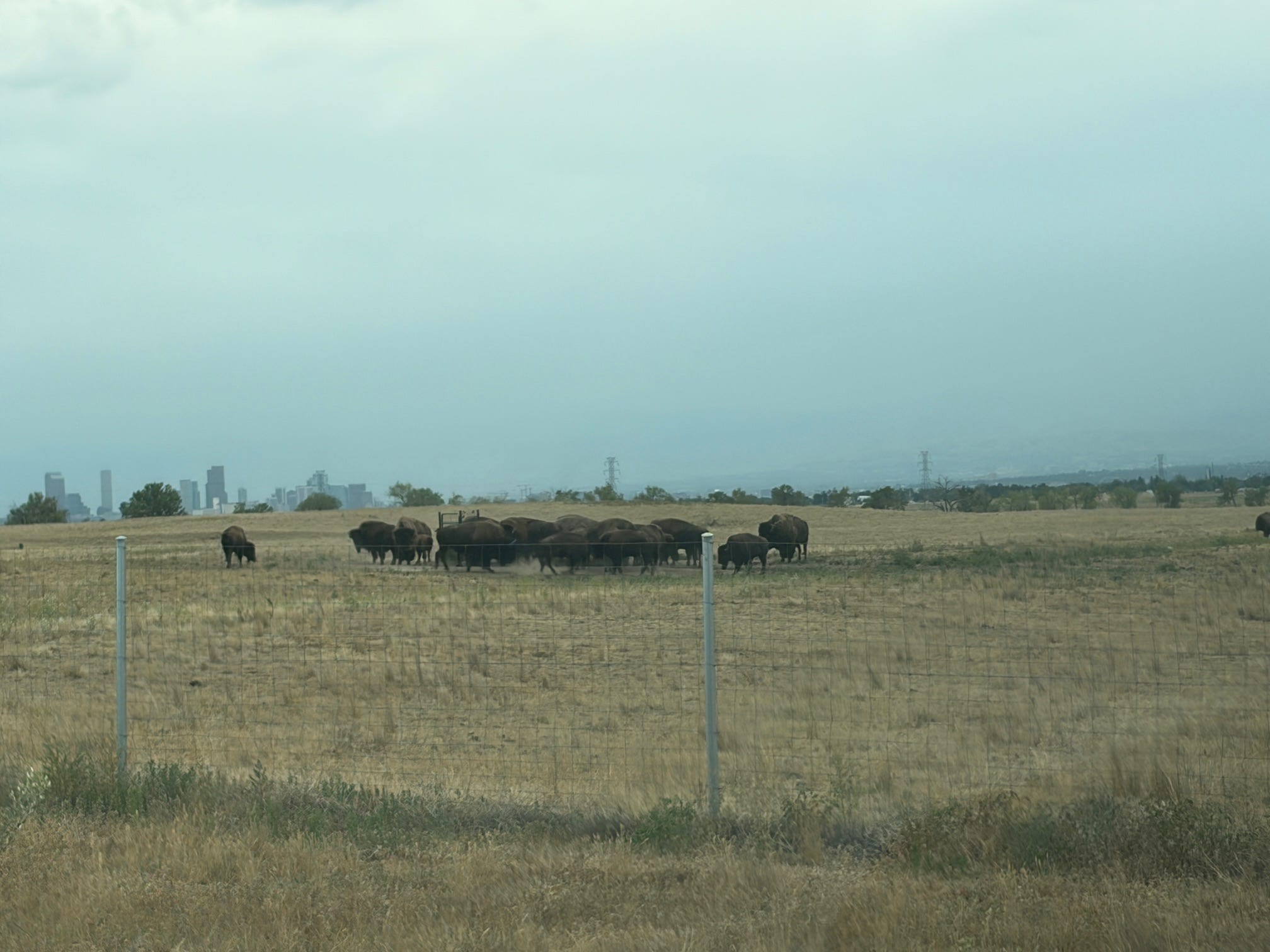
I was in Breckenridge last week, speaking at a couple of conferences. On the drive back to the Denver airport, I took a small detour for no real reason, just a bit of extra time on my hands. And there, in an open field, was a whole herd of bison, enormous and completely unbothered. They were nearly wiped out a century ago, so seeing this many felt like a small stroke of luck. The efficient route would have saved me twenty minutes, but I'd have missed this.
Until next time,
Laura
This was a great reframe, especially because of the premium society and culture places on "efficiency." It reminded me of something I've been thinking about as I write my first book: how much I should use AI to write it?
Certainly, it would make me much more efficient, especially if I have good prompts. But I derive a lot of joy from writing myself. The struggle and discomfort I feel when translating something from my brain to the page is difficult, but rewarding. It makes me more in tune with my own thinking. It makes me understand *why* I think the way I do. And as a result, I'm a better writer, speaker, and teacher because of it.
I know others feel differently about AI. But personally, I don't think I ever want to give up writing every word myself.